
Understanding Breast Lift Techniques: What Are the Different Options?
Changes in breast shape and position can occur naturally over time and may be influenced by pregnancy, weight fluctuations and ageing. For people considering breast lift surgery in Adelaide, understanding the different surgical techniques, their limitations and the factors that influence treatment planning can help support an informed discussion with a Specialist Plastic Surgeon.
What Is a Breast Lift?
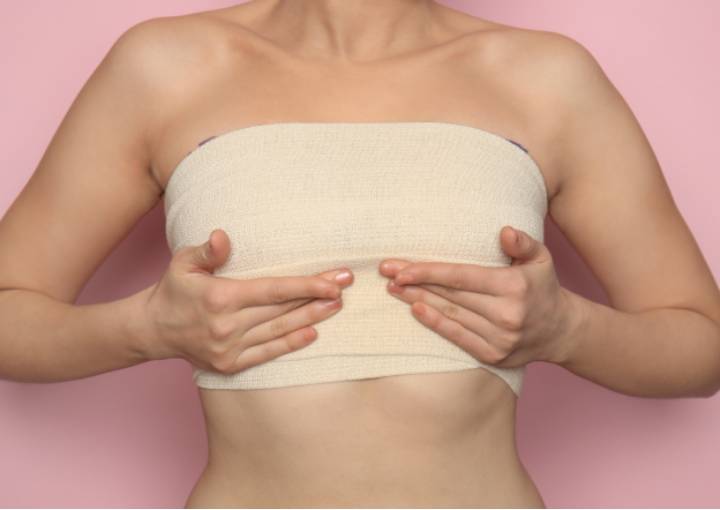
A breast lift, also known as mastopexy, is a surgical procedure that removes excess skin and reshapes the underlying breast tissue to change the position and contour of the breast. The position and size of the areola may also be adjusted where appropriate.
Types Of Breast Lifts
Breast lift surgery can involve different incision patterns and surgical techniques. The approach recommended will depend on factors such as breast size and shape, skin quality, nipple and areola position, and the degree of breast sagging. Not every technique is appropriate for every patient.
Crescent Lift
A crescent technique uses an incision along the upper edge of the areola and provides a limited degree of lift. It may be considered in selected patients requiring only a small adjustment and may sometimes be performed alongside breast augmentation.
Periareolar (Donut) Lift
A periareolar, or donut, lift may be considered for some patients with mild breast ptosis. It uses an incision around the areola, but it has limited lifting capacity and is not suitable for every patient.
Vertical (Lollipop) Lift
A vertical, or lollipop, lift may be recommended where a greater degree of reshaping is required. This technique uses an incision around the areola and vertically down the breast.
Anchor (Inverted-T) Lift
An anchor, or inverted-T, lift may be considered for patients requiring more extensive reshaping. It involves incisions around the areola, vertically down the breast and along the breast crease.
Which Type Of Breast Lift Is Right For You?
The most appropriate breast lift technique depends on your anatomy, skin quality, nipple position, degree of ptosis and individual goals. Your surgeon will assess these factors during consultation before recommending the approach that may be suitable for your circumstances.
How Much Will My Surgery Cost?
The cost of breast lift surgery varies depending on the surgical technique, complexity of the procedure, anaesthetic fees, hospital or facility fees and whether another procedure is performed at the same time. Following consultation, we can provide an individualised quote based on the recommended treatment plan.
Can a Breast Lift Be Combined with Other Procedures?
Depending on individual anatomy, goals and clinical suitability, breast lift surgery may be performed in combination with breast augmentation where additional volume is being considered, or breast reduction where a reduction in breast volume is also required.
What Should You Expect During Recovery?
Recovery after breast lift surgery varies depending on the surgical technique used, whether other procedures are performed at the same time and individual healing. Swelling, bruising and discomfort can occur during the early stages of recovery, and patients will generally need to temporarily limit strenuous activity and heavy lifting.
Breast lift surgery results in permanent scars. Their location and extent depend on the incision pattern used. Scars generally change in appearance as they mature and may become less noticeable over time, although they will not disappear completely. Your surgeon will discuss expected recovery, scar location, aftercare and when you can return to work and exercise as part of your treatment planning.
Risks and Considerations of Breast Lift Surgery
As with all surgery, breast lift surgery carries risks. These may include bleeding, infection, scarring, changes in nipple or breast sensation, asymmetry, delayed wound healing and the possibility of revision surgery. There may also be risks associated with anesthesia.
Individual risks vary and will be discussed in detail with your surgeon before deciding whether surgery is appropriate.
There is no single breast lift technique that is appropriate for every patient. The recommended approach depends on your anatomy, degree of breast ptosis, skin quality, health, expectations and whether changes to breast volume are also being considered. A consultation with a Specialist Plastic Surgeon allows these factors, along with the potential risks, recovery and limitations of surgery, to be discussed before deciding whether to proceed.
Book a consultation for a personalised assessment.
Frequently Asked Questions
Which breast lift technique is right for me?
Suitability is determined during a physical examination by your surgeon.
How does the breast lift technique affect scarring?
The location and extent of scarring depend on the incision pattern required. Techniques involving more extensive reshaping generally require longer incisions. Your surgeon will explain the expected scar pattern when discussing which approach may be appropriate for you.
Can I choose my technique or does the surgeon decide?
Techniques are recommended based on individual anatomical requirements and surgical safety.
How do I know what grade of sagging (ptosis) I have?
Ptosis severity is evaluated clinically during your initial assessment.
Can a breast lift be combined with implants?
A breast lift may be combined with breast implants in appropriately selected patients where changes to both breast position and volume are being considered. Combining procedures can also affect the risks and recovery involved, which should be discussed with your surgeon.
How long do breast lift results last?
Breast lift surgery can produce long-lasting changes to breast shape and position, but the breasts will continue to change naturally over time. Ageing, pregnancy and weight fluctuations may affect the appearance of the breasts following surgery, and individual outcomes vary.
Our Surgeons




Recent Post

Thigh Lift Surgery After Weight Loss: What You Need to Know
Saline vs Silicone Breast Implants: Understanding the Differences

Dupuytren’s Contracture: Symptoms, Progression and Treatment Options

Breast Reduction vs Breast Lift: What’s the Real Difference?

Understanding Breast Lift Techniques: What Are the Different Options?
Categories
- Blog (31)
- Body Contouring (2)
- Breast Surgery (8)
- Facial Surgery (7)
- Hand Surgery (4)
- Plastic & Cosmetic Surgery (General) (6)
- Skin & Cancer Surgery (3)