
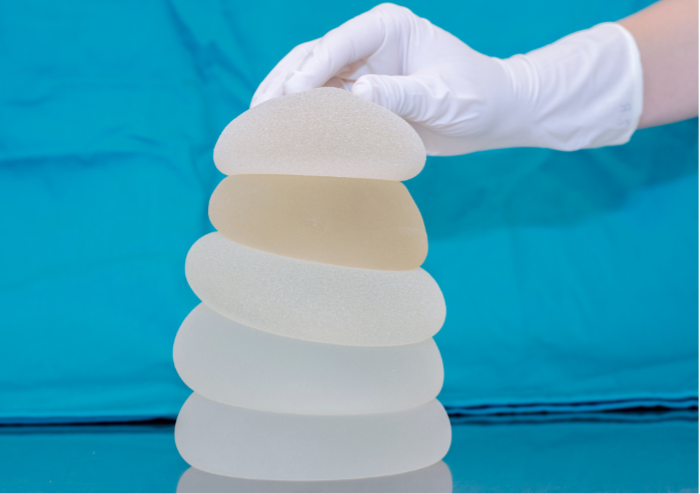
Saline vs Silicone Breast Implants: Understanding the Differences
Choosing between saline and silicone implants is one of the first decisions when considering breast augmentation. Each has different characteristics that affect feel, appearance, incision size, and monitoring. Understanding these differences can help you have a more informed discussion about your breast implant options.
What Are Breast Implants Made Of?
Modern breast implants have a silicone outer shell and differ mainly in their filler. They can also have smooth or textured surfaces and round or anatomical shapes. These are separate considerations from whether the implant contains saline or silicone gel.
Saline Breast Implants
Saline implants have a silicone shell filled with sterile salt water. Surgeons insert them empty and fill them during surgery, allowing volume adjustment and a smaller incision. If the shell fails, the body absorbs the saline and deflation is usually noticeable.
Silicone Breast Implants
Silicone implants are pre-filled with cohesive silicone gel designed to hold their shape. They are generally described as feeling closer to natural breast tissue. Highly cohesive implants are sometimes called “gummy bear” implants. As they arrive pre-filled, they usually require a slightly larger incision.
Saline vs Silicone Breast Implants: Key Differences
The main differences relate to filler, feel, incision size, rupture and monitoring:
Consideration | Saline | Silicone |
Filler | Sterile salt water | Cohesive silicone gel |
Feel | Firmer | Generally more natural |
Incision | Smaller | Slightly larger |
Rippling | More likely with thin tissue | Less likely |
Shell failure | Visible deflation; saline absorbed | May be silent |
Monitoring | Usually noticeable without imaging | Ultrasound or MRI may be recommended |
Volume adjustment | Possible during surgery | Chosen beforehand |
Cost | Generally lower | Generally higher |
Look, Feel and Rippling: What Actually Differs
The final appearance depends on the implant as well as your breast tissue, skin thickness, implant position and chest dimensions. Rippling refers to visible or palpable folds and is more likely when less tissue covers the implant.
Rupture, Safety and Long-Term Monitoring
How Saline Implant Rupture Presents
A ruptured saline implant usually deflates and changes breast shape as the fluid is absorbed. The implant shell will generally need to be removed or replaced.
How Silicone Implant Rupture Presents
Silicone rupture can be “silent”, with no obvious change in breast shape. A doctor should assess swelling, pain, or changes in breast appearance.
Recommended Follow-Up and Imaging
Regular follow-ups with your surgeon are important. A doctor may recommend ultrasound or MRI, depending on the implant type and your individual circumstances. Keep your implant card and device information for future reference.
Are Breast Implants Regulated in Australia?
Breast implants supplied in Australia must be included in the Australian Register of Therapeutic Goods (ARTG). The TGA regulates these medical devices, while the Australian Breast Device Registry (ABDR) records breast device surgery and outcomes. Patients should receive information about their specific implant and retain their records.
Cost Considerations for Breast Augmentation in Adelaide
Costs may include the surgeon, anaesthetist, hospital, implants, garments and follow-up care. Silicone implants are generally more expensive than saline. Purely cosmetic breast augmentation generally does not attract a Medicare rebate. Ask for an itemised quote when discussing breast augmentation cost.
Book your Consultation
Both saline and silicone implants can provide excellent results. The best option depends on your anatomy, lifestyle, aesthetic goals and personal preferences. A qualified surgeon can guide you through your options and recommend an implant that supports your desired outcome, confidence, and long-term satisfaction.
Book a consultation with Plastic Surgery Central to discuss your breast augmentation options in Adelaide.
Frequently Asked Questions
Which is safer: saline or silicone breast implants?
Both have different risks and considerations. Your surgeon can discuss which option suits you.
Do silicone implants feel more natural than saline?
They are generally described as feeling closer to natural breast tissue, although your own tissue and implant placement also affect feel.
How will I know if my implant has ruptured?
Saline rupture is usually noticeable through deflation. Silicone rupture can be silent and may require imaging to detect.
Do breast implants need to be replaced after 10 years?
Replacement depends on the implant’s condition, symptoms and your individual circumstances.
Can I switch from saline to silicone implants later?
You can switch to a different type when clinically appropriate.
Will breast implants affect mammograms or breast screening?
They can require specific mammography techniques. Always tell the screening provider that you have implants.
Do I need a breast lift as well as implants?
A lift may be considered if you have significant breast sagging or excess skin, along with a need for increased volume.
Our Surgeons




Recent Post

Thigh Lift Surgery After Weight Loss: What You Need to Know
Saline vs Silicone Breast Implants: Understanding the Differences

Dupuytren’s Contracture: Symptoms, Progression and Treatment Options

Breast Reduction vs Breast Lift: What’s the Real Difference?

Understanding Breast Lift Techniques: What Are the Different Options?
Categories
- Blog (31)
- Body Contouring (2)
- Breast Surgery (8)
- Facial Surgery (7)
- Hand Surgery (4)
- Plastic & Cosmetic Surgery (General) (6)
- Skin & Cancer Surgery (3)