
What is Melanoma? Causes, Symptoms, and Treatment Options
Melanoma is a serious form of skin cancer that develops in the pigment-producing cells of the skin, known as melanocytes. These cells are responsible for giving the skin its colour. When melanocytes begin to grow uncontrollably, they can form a melanoma.
While melanoma is the 4th most common type of skin cancer, it is the most dangerous type due to its potential to spread to other parts of the body if not detected early. Early diagnosis and treatment are key to improving outcomes.
Causes of Melanoma
Most melanomas are linked to exposure to ultraviolet (UV) radiation from the sun or artificial sources such as tanning beds. However, other genetic and environmental factors can also play a role.
Common Causes and Risk Factors:
- Excessive sun exposure, especially during childhood
- Fair skin that burns easily or freckles
- History of sunburns
- Having a large number of moles or atypical moles
- Family history of melanoma or other skin cancers
- Weakened immune system
- Regular use of tanning beds
Australia has one of the highest rates of melanoma in the world due to high UV exposure and a fair-skinned population. Regular skin checks are particularly important for South Australians, where UV levels remain high even in cooler months.
Melanoma Symptoms – How to Spot Early Signs
Melanoma can develop anywhere on the body, including areas not typically exposed to the sun, such as the soles of the feet or under the nails. Recognising early signs is crucial for timely diagnosis and treatment.
The ABCDE Rule for Melanoma Detection:
- A – Asymmetry: One half of the mole looks different from the other.
- B – Border: Edges are irregular, blurred, or not well-defined.
- C – Colour: Multiple shades of brown, black, red, or white are visible.
- D – Diameter: The spot is larger than 6mm (about the size of a pencil eraser).
- E – Evolving: Any noticeable change in size, shape, colour, or sensation.
The “Ugly Duckling” Sign:
Look for any mole or spot that appears different from the others on your skin. If one lesion stands out or changes while others remain the same, it should be checked by a doctor.
Types of Melanomas
Melanoma can appear in different forms depending on where and how it develops.
| Type | Description | Common Locations | Growth Pattern / Prognosis |
| Superficial Spreading Melanoma | Most common type; spreads across the skin surface before invading deeper layers. | Torso, arms, and legs | Slow growing if detected early. |
| Nodular Melanoma | More aggressive; grows vertically and quickly penetrates deeper skin layers. | Head, neck, chest | Rapid growth; requires early treatment. |
| Lentigo Maligna Melanoma | Often occurs in older adults; arises from long-term sun exposure. | Face, ears, scalp | Slow to develop but may become invasive. |
| Acral Lentiginous Melanoma | Appears on palms, soles, or under nails; not related to sun exposure. | Hands, feet, nails | Often diagnosed later due to hidden location. |
How is Melanoma Diagnosed?
Melanoma is diagnosed through a combination of physical examination and laboratory testing.
Steps in Diagnosis:
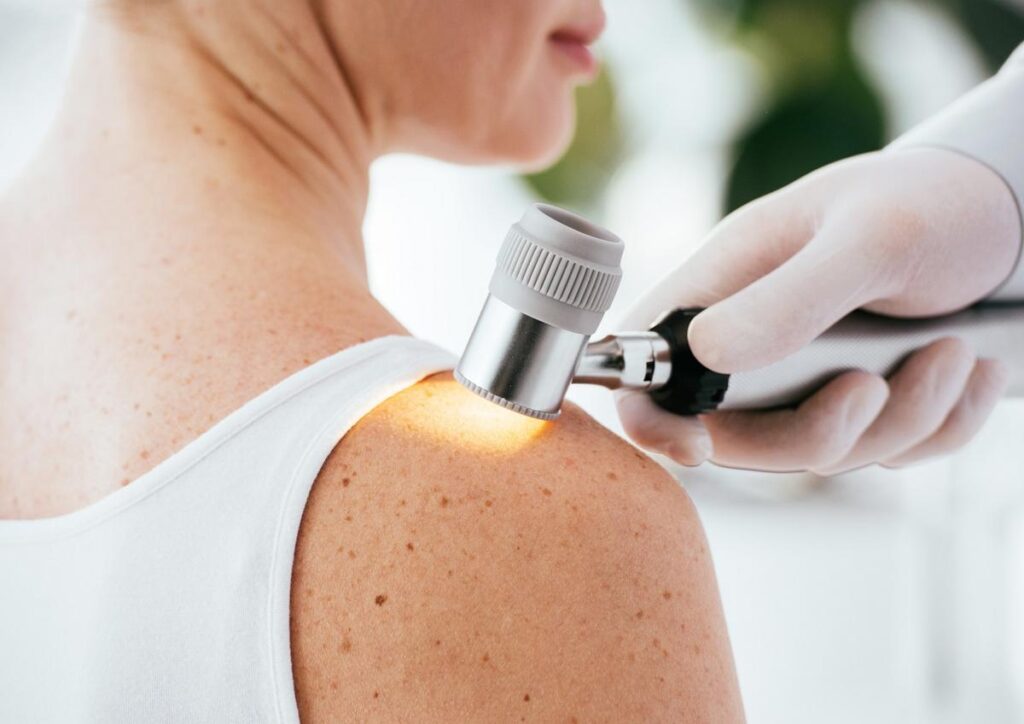
- Skin Examination: A doctor inspects moles or lesions using a dermatoscope.
- Biopsy: A small tissue sample is removed for microscopic analysis.
- Histopathology: The sample is examined by a pathologist to confirm melanoma and assess its thickness (Breslow depth).
- Staging: Further tests (e.g. lymph node biopsy, CT or PET scan) may be required to determine if melanoma has spread.
Is a biopsy necessary for melanoma diagnosis?
Yes. A biopsy is the only way to confirm melanoma, as visual assessment alone cannot determine the exact type or stage.
Treatment Options for Melanoma
The best treatment depends on the type, thickness, and spread of the melanoma. Early-stage melanomas are often curable with surgery alone.
Common Treatment Approaches:
- Surgical Excision: The most common treatment; removes the melanoma with a margin of healthy tissue.
- Sentinel Lymph Node Biopsy: Assesses if cancer has spread to nearby lymph nodes.
- Immunotherapy: Stimulates the immune system to target melanoma cells.
- Targeted Therapy: Uses drugs that act on specific genetic mutations within melanoma cells.
- Radiotherapy or Chemotherapy: Occasionally used for advanced or recurrent cases.
At Plastic Surgery Central, our surgeons perform melanoma excisions with the necessary margin for cure, focusing on precise removal and optimal reconstruction for minimal scarring and natural contour.
Prevention and Early Detection of Melanoma
Preventing melanoma starts with protecting your skin and monitoring for changes.
Sun Safety Checklist:
☑ Avoid peak sunlight hours.
☑ Wear SPF 50+ broad-spectrum sunscreen and reapply regularly.
☑ Cover exposed skin with hats, long sleeves, and sunglasses.
☑ Seek shade where possible.
☑ Schedule regular skin checks, annually, or more often if you’ve had previous skin cancers.
Early detection offers the best chance of successful treatment.
Living with Melanoma: Prognosis and Support
Prognosis varies depending on the stage at diagnosis. When detected early, melanoma has a high survival rate. Follow-up care often includes regular skin checks, imaging, and ongoing review with your healthcare team.
At Plastic Surgery Central, patients are supported through every step of their melanoma journey — from diagnosis and surgery to recovery and ongoing monitoring.
For additional information, visit:
Frequently Asked Questions
What are the causes and symptoms of melanoma?
Melanoma is primarily caused by UV exposure. Symptoms include changing moles, irregular borders, and new or unusual skin lesions.
What are the treatment options for melanoma?
Surgery is the main treatment, often followed by lymph node biopsy, immunotherapy, or targeted therapy if required.
What is the main cause of melanoma?
Most cases result from UV radiation exposure, especially in fair-skinned individuals.
Does melanoma cause other symptoms?
In advanced stages, melanoma can cause fatigue, swelling in lymph nodes, or weight loss if it spreads.
What kills melanoma cells naturally?
There are no proven natural remedies to cure melanoma. Evidence-based medical treatment is essential for managing the disease.
What does melanoma start like?
It often begins as a new or changing mole, typically with irregular colour, shape, or size.
Our Surgeons




Recent Post
Thigh Lift Surgery After Weight Loss: What You Need to Know
Saline vs Silicone Breast Implants: Understanding the Differences
Dupuytren’s Contracture: Symptoms, Progression and Treatment Options
Breast Reduction vs Breast Lift: What’s the Real Difference?

Understanding Breast Lift Techniques: What Are the Different Options?
Categories
- Blog (31)
- Body Contouring (2)
- Breast Surgery (8)
- Facial Surgery (7)
- Hand Surgery (4)
- Plastic & Cosmetic Surgery (General) (6)
- Skin & Cancer Surgery (3)